Climate Volatility Is Reshaping Reinsurance, Infrastructure Determines Who Can Scale
Insurance markets are tightening as volatility rises, pushing premiums up, coverage terms tighter, and some regions dropped entirely.
- Insurance markets are tightening as volatility rises, pushing premiums up, coverage terms tighter, and some regions dropped entirely.
- Climate driven loss trends are widening uncertainty in reinsurance, making risk more capital intensive and forcing capital to become more selective.
- Reinsurance is fundamentally a capital coordination system, and in stressed moments, opacity and slow reporting become real bottlenecks to capacity.
- Re is building onchain reinsurance infrastructure to make capital backing more transparent, aligned, and scalable, supporting future risk markets at planetary scale.
For many people, the first sign that insurance markets are changing comes down to coverage getting more expensive, harder to renew, or disappearing entirely.
A policy that renewed automatically for years suddenly includes new exclusions. In some regions, insurers stop writing policies altogether. These experiences are not isolated decisions by individual insurers. They are symptoms of a deeper shift happening in reinsurance markets, where global risk is matched with capital.
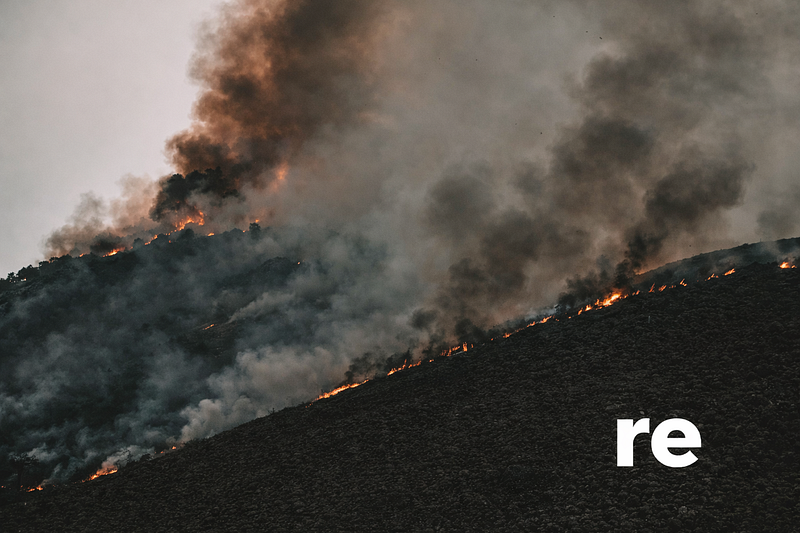
At Re, we view these moments as signals of structural change. The world has always been risky. Hurricanes, earthquakes, fires, and floods are not new. What is changing is the speed, spread, and unpredictability of loss events. When risk changes faster than the system can adapt, the system begins to strain.
What People Are Noticing First
Across regions, weather patterns are appearing in unfamiliar ways. Deep freezes in historically warm areas. Record snowfall where infrastructure was never designed for it. The issue is not simply that disasters exist. It is that loss patterns are becoming harder to predict.
For reinsurance markets, this matters enormously. Climate related loss trends are contributing to greater volatility and uncertainty, which changes how risk must be financed. Reinsurers need more capital set aside to support the same amount of exposure, while the range of potential outcomes widens. Bad years become worse, and forecasting where the next loss will occur becomes more difficult.
To communities, this feels like the rules suddenly changed. In reality, the underlying risk environment moved faster than the financial system designed to manage it.
Insurance Feels It First
Insurance is a promise priced on history. Policies are built using decades of past data to estimate future outcomes. When patterns shift, pricing becomes harder.
Insurers respond in predictable ways: prices rise, coverage tightens, and exposure is reduced, but only the safest risks are reinsured. Markets that feel stable, experience sharp pricing cycles. These cycles reflect uncertainty about whether capital backing future losses is sufficient.
As severity and duration risk evolve, capital becomes more selective. Confidence in how risk is financed, and it becomes as important as underwriting itself. This is where the system reveals its dependence on durable capital infrastructure.
Reinsurance Is a Capital Coordination System
At its core, reinsurance is a mechanism for coordinating capital. Reinsurance matches risk with global capital providers willing to absorb uncertainty in exchange for return. The resilience of the entire insurance ecosystem depends on how efficiently that matching process works.
When volatility rises, the challenge is not only assessing risk, but ensuring that capital providers understand what they are backing, how losses are structured, and where exposure sits. Markets function when capital confidence is high. When confidence declines, capacity contracts.
This is why structural transparency matters. The way capital is organized and verified becomes a defining factor in whether markets can continue to scale.
Why the System Feels Strained
Volatility itself is not new: disasters have always existed. What has changed is the pace of events, the clustering of losses across regions, and the uncertainty surrounding future outcomes. The distribution of risk widens, and capital grows more cautious.
Reinsurance ultimately runs on one question: Is the backing real, sufficient, and clearly visible?
During stressed periods, opacity and slow reporting become bottlenecks, and with that, capital hesitates when visibility declines. Deployment also slows, pricing hardens, and coverage tightens downstream.
Climate volatility is only one force contributing to this shift. Geopolitical instability, inflation, and legal trends are also reshaping global risk markets. Together, they create a more uncertain environment. In that environment, scalable and verifiable capital infrastructure determines which platforms can grow responsibly.
From Re’s perspective, the strain visible today is less about individual disasters and more about systems built for slower moving risk now operating in a faster world.
Infrastructure Determines Who Can Scale
As uncertainty increases, infrastructure becomes the limiting factor. Historically, reinsurance capital has relied on fragmented reporting, intermediated structures, and delayed visibility into exposure and performance. These systems evolved when risk cycles moved slowly and capital decisions could unfold over long timelines. Today, markets increasingly require:
- Clear visibility into capital backing
- Transparent program structures
- Defined loss and participation rules
- Faster verification of outcomes
Scaling responsibly depends on capital confidence, and capital confidence depends on infrastructure. Re is building onchain reinsurance infrastructure designed to improve transparency, alignment, and scalability across programs.
Rather than focusing solely on underwriting outcomes, Re focuses on strengthening the capital layer itself: how participation is structured, verified, and coordinated.
Building the Infrastructure for Future Risk Markets
Re’s vision is not tied to a single category of risk or a specific market cycle. The goal is to build an infrastructure layer capable of supporting increasingly complex risk environments over time.
Onchain systems allow capital participation and program structure to become more transparent and verifiable, improving alignment between risk originators and capital providers. As volatility increases, these characteristics become essential rather than optional.
The long term vision is an infrastructure layer that can support a much wider range of risks, ultimately enabling risk markets to operate at planetary scale. Climate volatility helps reveal why this evolution is necessary. It exposes the limits of legacy systems built for a slower world.